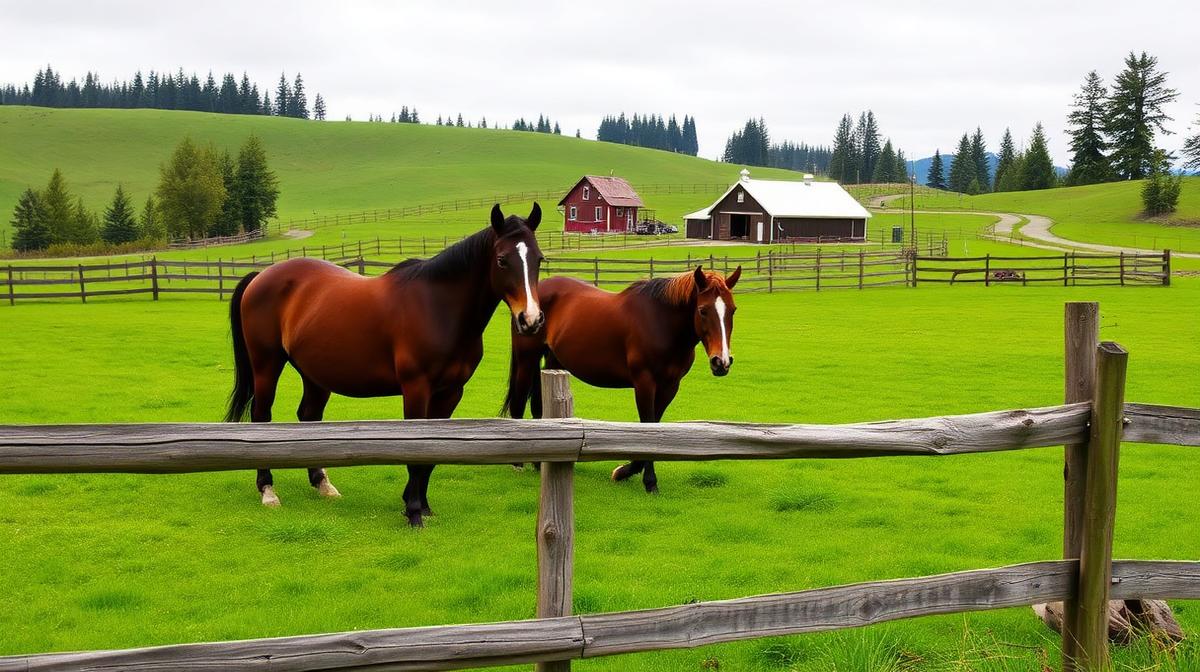
Snohomish County is home to thousands of agricultural properties — horse farms, cattle ranches, hobby farms, and large-acreage rural homesteads that all depend on reliable fencing. Whether you're in the Snohomish River valley, the hills above Arlington, or the farmland east of Monroe, choosing the right farm fence is one of the most important decisions you'll make for your property.
Field Fence (Woven Wire): The Workhorse
Field fence is the standard for general livestock containment across Snohomish County. This woven wire fencing features graduated mesh openings — smaller at the bottom to contain small animals, larger at the top for material efficiency. It's effective for cattle, goats, sheep, and general property containment. At $5–$10 per linear foot installed, it's the most cost-effective option for large perimeters. Most agricultural properties in Arlington, Monroe, and rural Snohomish use field fence as their primary containment.
High-Tensile Wire: Maximum Coverage, Minimum Cost
For large acreage properties that need perimeter definition without livestock containment, high-tensile smooth wire provides the most linear footage per dollar. Running $6–$10 per foot with 4–5 strands, it's effective for cattle and horses when combined with proper training. The wire maintains tension over long runs, making it ideal for the large pastures common in the Stillaguamish valley and the agricultural areas north of Arlington.
Board Fencing: The Standard for Horse Properties
Snohomish County has a significant equestrian community, and board fencing (3-rail or 4-rail) is the preferred choice for horse properties. Board fencing is safe — no wire edges for horses to catch legs on — and it looks fantastic. Cedar board fencing runs $12–$18 per foot depending on rail count. For maximum horse safety, we recommend adding no-climb mesh to the inside face of board fencing. This combination prevents horses from reaching through or over the rails while maintaining the attractive appearance.
The Fence Line Problem: Why Clearing Matters
Here's the reality most farm fencing guides don't address: in Snohomish County, your fence line is probably overgrown. Blackberry, alder, salal, and brush take over fence lines within 2–3 years in our climate. Installing fence through overgrown vegetation is slow, expensive, and produces inferior results — posts can't be set properly, wire can't be tensioned correctly, and the fence is immediately competing with aggressive vegetation. At Sasquatch Land Co., we solve this problem because we're both a land clearing and fencing contractor. Our forestry mulching equipment clears your fence line to bare ground before installation begins. This one-crew approach saves 30–40% compared to hiring a separate clearing contractor and produces a dramatically better finished product.
Electric Fence: Supplemental and Standalone
Electric fence serves as both a standalone containment solution and a supplement to existing fencing. Solar-powered energizers make electric fence practical for remote pastures without grid power — common on larger Snohomish County properties. We install permanent electric fence systems with proper grounding and energizer sizing for your specific perimeter length and livestock type.
Get Your Farm Fence Quote
Every agricultural property is unique, and the best fencing solution depends on your livestock, terrain, acreage, and budget. We provide free on-site estimates throughout Snohomish County for farm fencing projects of any size. Call (360) 322-4587 or visit our farm fencing page to learn more.
Explore Our Services
Service Areas Mentioned
Related Services
Ready to get started?
Get a Free Quote