Emergency Response
Storm Cleanup in Western Washington
When Western Washington storms bring down trees and scatter debris across your property, we respond fast to clear damage and restore access.
When Storms Hit Western Washington
Western Washington experiences some of the most powerful windstorms in the continental United States. The combination of Pacific storm systems, convergence zones, and the region's tall, shallow-rooted tree canopy creates perfect conditions for devastating wind events. Major storms in recent years have brought sustained winds of 50–70 mph with gusts exceeding 90 mph across Snohomish, King, Skagit, and Whatcom counties.
When these storms hit, they leave chaos in their wake: downed trees blocking driveways and roads, snapped power poles, crushed fences, damaged outbuildings, and debris fields covering acres of property. The aftermath requires fast, professional cleanup to restore access, prevent secondary damage, and begin the recovery process.
Our Storm Cleanup Services
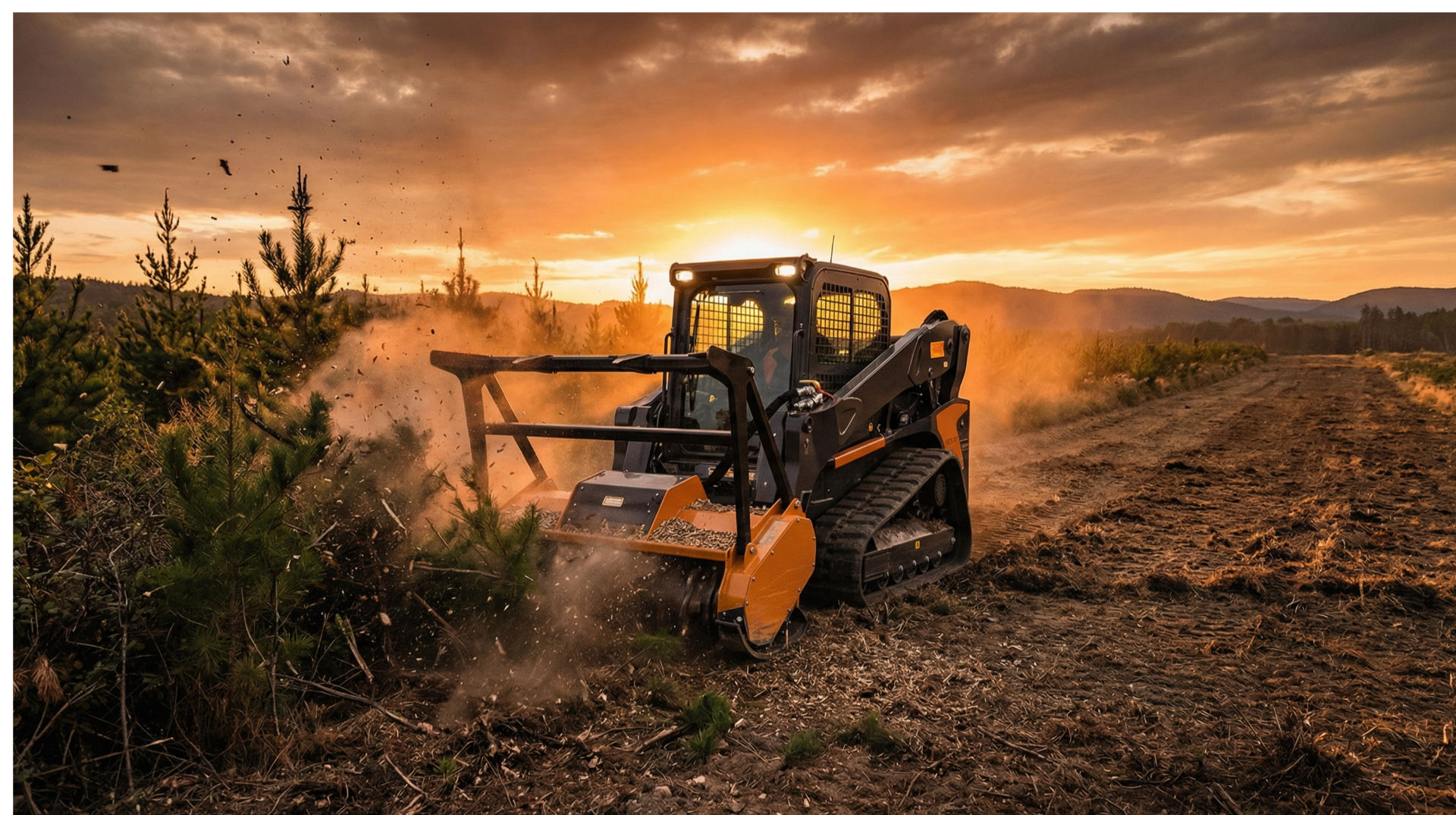
Sasquatch Land Co. provides rapid storm cleanup services across our entire Western Washington service area. We deploy our CAT 255 forestry mulching equipment to process fallen trees, branches, and woody debris directly on-site — no hauling, no dump fees, no waiting for debris trucks.
Our storm cleanup services include downed tree removal and processing, driveway and road access restoration, fence line clearing and debris removal, property-wide debris mulching, hazard tree identification and removal, and emergency access cutting for stranded properties.
Unlike tree service companies that cut storm debris into logs and branches that must be hauled off-site, our mulching approach processes everything in place. A 60-foot downed Douglas fir that would take a crew half a day to buck, load, and haul is reduced to mulch in under an hour with our equipment.
Why Speed Matters After a Storm
Storm damage creates cascading problems the longer it goes unaddressed. Downed trees can dam drainage channels, redirecting stormwater into foundations and crawl spaces. Broken branches hanging in the canopy ("widow-makers") pose serious injury risk to anyone walking below. Crushed fencing allows livestock to escape and wildlife to enter.
In Western Washington, storms are often followed by heavy rain — sometimes for weeks. Debris that blocks drainage paths during this critical period can cause flooding that causes far more damage than the original wind event. Getting debris cleared and drainage restored quickly is essential to protecting your property from secondary damage.
Insurance claims also benefit from prompt cleanup. Documenting damage and beginning restoration quickly demonstrates mitigation of further loss — a key factor in claims processing. We photograph all damage before and after clearing for your insurance records.
Storm Season in Western Washington
The primary storm season runs from October through March, when Pacific atmospheric rivers and frontal systems bring the strongest winds to our region. The "Pineapple Express" events that carry warm, moisture-laden air from Hawaii frequently produce the most destructive winds, particularly along the I-5 corridor through Snohomish and Skagit counties.
Convergence zone events — where winds from the Strait of Juan de Fuca collide with winds flowing through the Cascades — create localized wind events that can cause severe damage in narrow bands. These storms are particularly common in the Everett-to-Marysville corridor and can topple trees while leaving properties just a mile away untouched.
Summer storms are less frequent but can be equally destructive. Thunderstorms in July and August occasionally produce downbursts and microbursts with winds exceeding 70 mph. These events are particularly dangerous because they're localized, unpredictable, and often occur when soil is dry and root systems have less hold.
Emergency Response Protocol
During and after major storms, we activate our emergency response protocol. We prioritize calls based on safety urgency — blocked emergency access, trees on structures, and hazardous hanging limbs take priority over cosmetic cleanup.
We maintain equipment readiness throughout storm season, with our CAT 255 serviced, fueled, and loaded on transport ready to deploy at short notice. Our typical response time is 24–72 hours after a major storm event, depending on the scope of damage across our service area.
For properties that experience recurring storm damage, we offer preventive clearing services. By removing weak, leaning, or damaged trees before storm season, you significantly reduce the risk of downed trees and the cleanup costs that follow. Many property owners in exposed locations along the I-5 corridor schedule annual hazard tree assessments as part of their storm preparedness.
Storm Damage Prevention
The best storm cleanup is the storm cleanup you never need. We help property owners reduce their storm vulnerability through strategic vegetation management. Key prevention services include hazard tree removal (dead, diseased, or structurally compromised trees), canopy thinning to reduce wind resistance, clearing around structures to prevent impact damage, and drainage maintenance to handle storm runoff.
Properties with dense, unmanaged tree cover are significantly more vulnerable to wind damage. By selectively thinning your canopy and removing hazard trees, we reduce the risk of catastrophic blowdowns while preserving the trees that are healthy and structurally sound.
We also recommend clearing a 30-foot defensible space around homes and outbuildings. This buffer zone prevents direct tree strikes during storms and creates space for falling debris to land without hitting structures.
Before & After
Storm Cleanup Results
See real storm cleanup transformations from Sasquatch Land Co. projects across Western Washington.
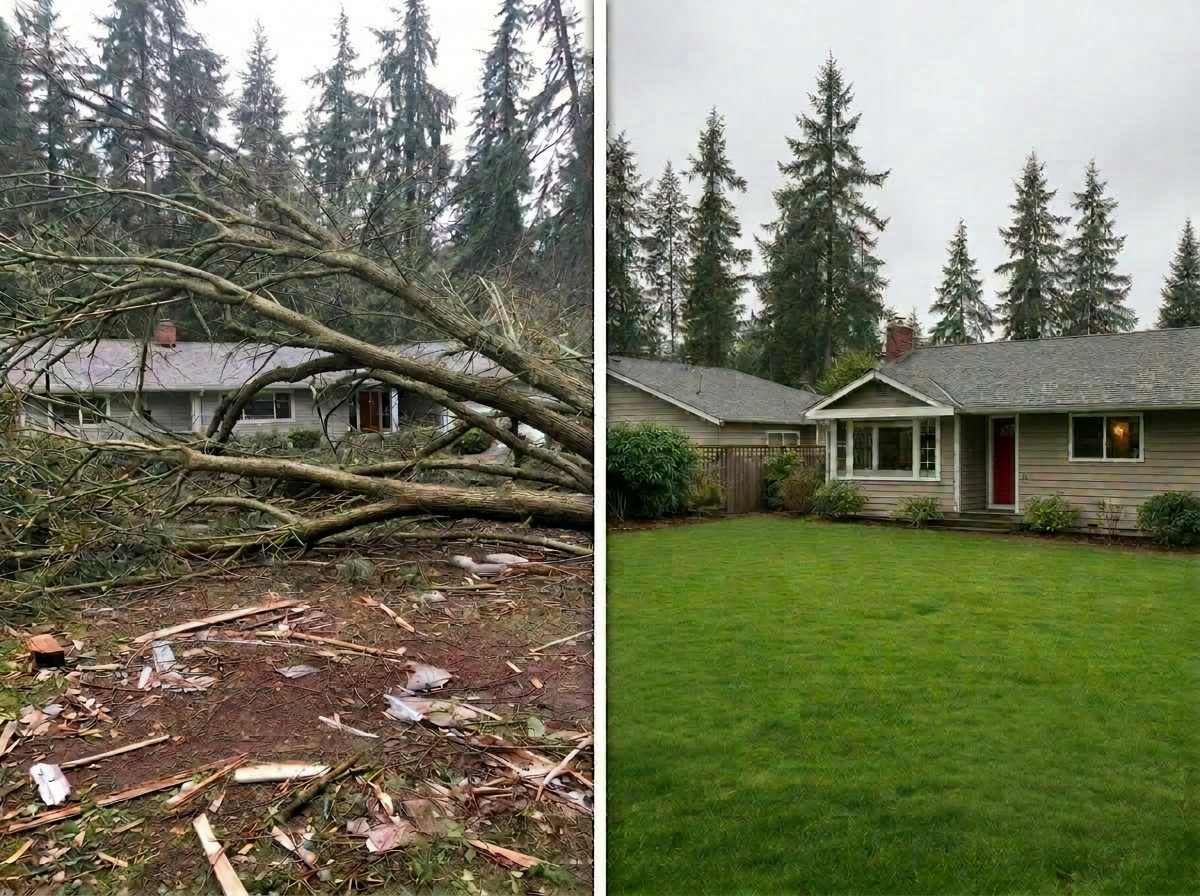
Storm Damage Cleanup — Residential
Massive fallen trees removed and hauled away after windstorm, restoring safety and clean yard to this PNW home.
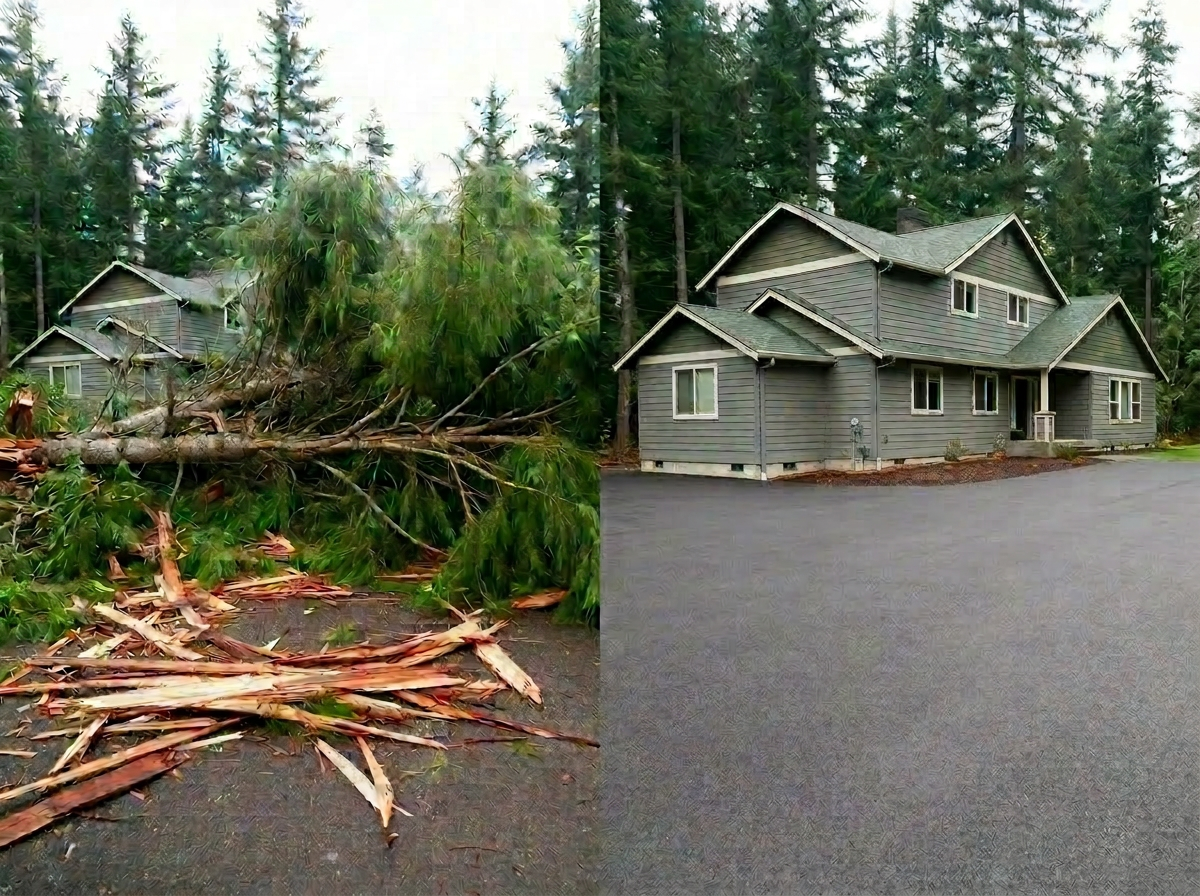
Driveway Access Restored
Downed cedar blocking driveway completely removed within 24 hours of storm, driveway fully accessible again.
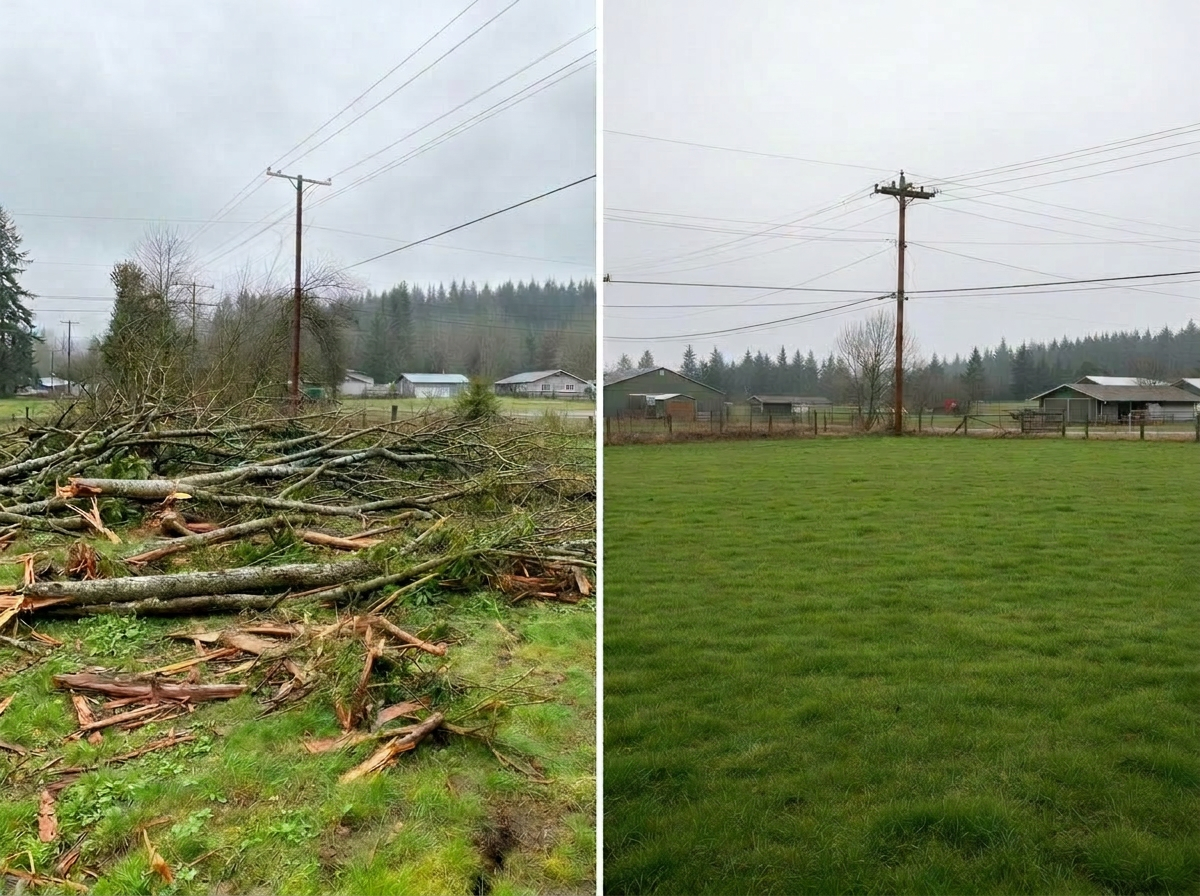
Rural Storm Debris Clearing
Widespread storm debris across rural property cleared and hauled off, leaving clean open pasture.
Ready to Get Started?
Free estimates within 48 hours. Most jobs completed in a single day. No hidden fees, no surprises.
Request Your Free QuoteFrequently Asked Questions
Storm Cleanup FAQ
Areas We Serve for Storm Cleanup
Looking for professional storm cleanup near you? We provide storm cleanup services across Western Washington, including these top communities:
Get Your Free Storm Cleanup Estimate
Call now or fill out our form for a free, no-obligation quote. Most estimates scheduled within 48 hours.