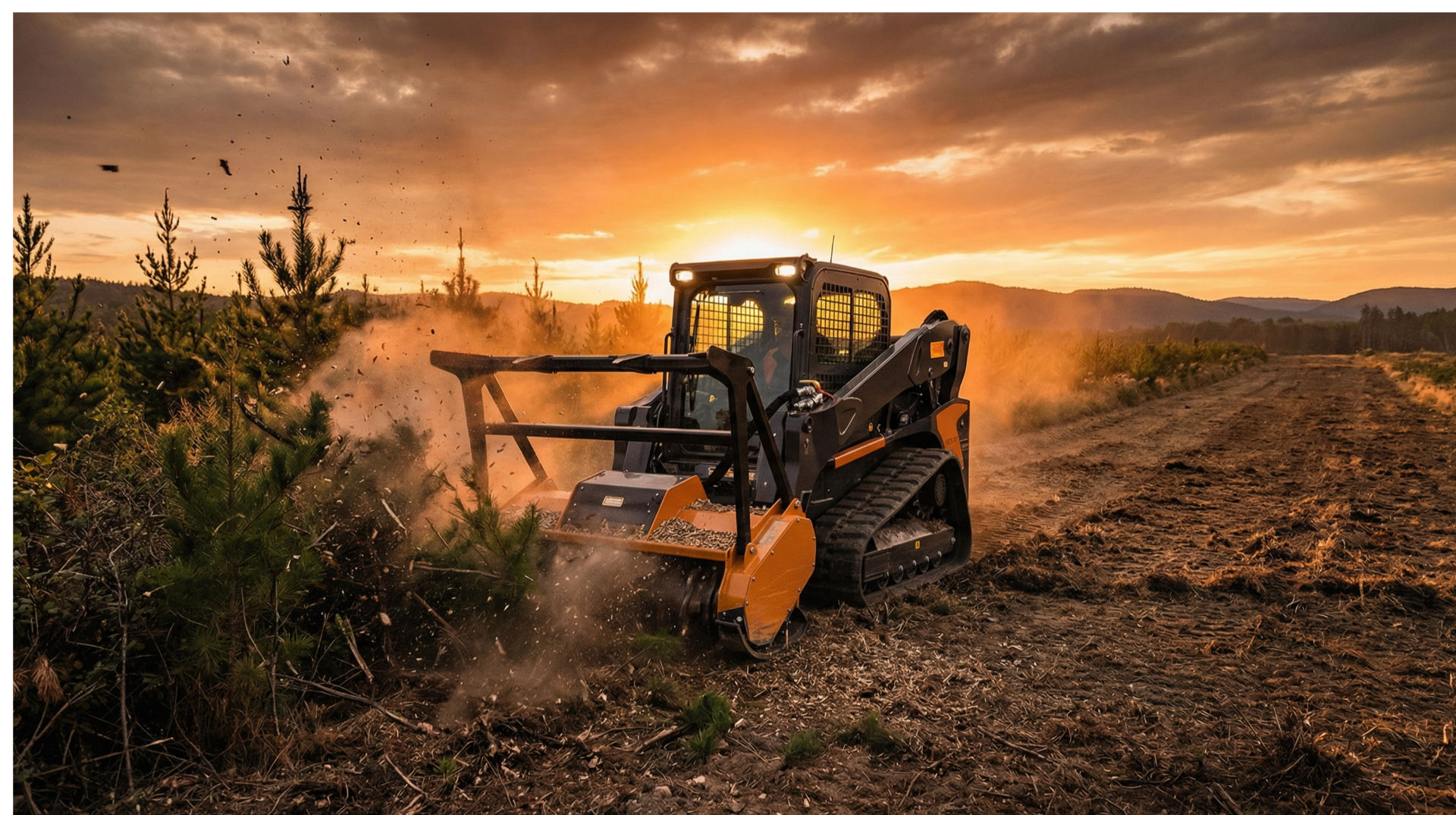
Steep Slope Specialists
Hillside Mulching near Snohomish, WA
Reclaim steep, overgrown hillsides that other companies won't touch. Our tracked equipment safely clears slopes up to 35° across Western Washington.
This page covers one specific problem: slopes too steep for normal equipment. If your ground is reasonably flat, the work you want is standard forestry mulching.
Why Hillside Clearing Requires Specialized Equipment
Western Washington is defined by its terrain — glacial ridges, river bluffs, Cascade foothills, and steep ravines that make up a significant portion of the region's residential and rural properties. Standard wheeled equipment simply cannot operate safely on slopes above 15–20 degrees. That leaves thousands of property owners with overgrown hillsides they can't maintain and most contractors won't touch.
At Sasquatch Land Co., hillside mulching is one of our core specialties. Our CAT 275XE compact track loader is purpose-built for challenging terrain. Its low center of gravity, rubber track system, and exceptional ground pressure distribution allow us to safely operate on grades up to 35 degrees — well beyond what conventional equipment can handle.
The Erosion Problem on Western Washington Slopes
Steep slopes in Western Washington face a constant erosion battle. With 35–55 inches of annual rainfall hitting clay-heavy glacial soils, unmanaged hillsides are prone to surface erosion, soil creep, and in severe cases, shallow landslides. Paradoxically, both overgrown and freshly cleared slopes can be vulnerable — the key is how you clear them.
Traditional clearing methods like bulldozing strip away the root structure and topsoil that hold hillsides together. This is catastrophic on Western Washington slopes, where the next heavy rain can wash away years of soil development. Forestry mulching takes the opposite approach: we remove the above-ground vegetation while leaving the root systems intact. The mulch layer we create acts as a natural erosion blanket, absorbing rainfall impact and slowing surface runoff.
Over 12–18 months, the mulch decomposes into the soil while new ground cover establishes, creating a stable, managed slope that resists erosion far better than either overgrown brush or bare dirt.
Common Hillside Mulching Projects
Residential hillside reclamation is our most frequent request. Properties throughout Snohomish County — particularly in Lake Stevens, Monroe, Granite Falls, and the Everett hillside neighborhoods — sit on slopes that become impenetrable thickets of blackberry, alder, and salal within just a few years of neglect. We restore these hillsides to maintained, accessible land while preserving slope stability.
View corridor clearing is popular along the bluffs and ridgelines of Western Washington. We selectively clear vegetation to open sight lines to the Cascades, Puget Sound, or river valleys while maintaining enough root structure and canopy to prevent erosion and preserve privacy.
Brush control on hillsides adjacent to homes is one of the most common reasons owners call us. Steep, brushy slopes are difficult to maintain by hand and quickly turn into impassable thickets. Our hillside clearing opens that ground back up on terrain that walk-behind equipment cannot safely handle.
Drainage and access trail creation on hillsides helps property owners manage water flow and maintain foot access to lower portions of their property. We cut switchback trails and clear drainage swales that work with the natural contours of the slope.
Our Approach to Steep Terrain
Every hillside job starts with a thorough terrain assessment. We walk the slope, evaluate soil stability, identify seepage zones and drainage patterns, and determine the safest approach angles for our equipment. Safety is non-negotiable — if conditions are too wet or unstable, we'll reschedule rather than risk damaging your slope.
We typically work hillsides from the top down, clearing in lateral passes that follow the contour of the slope. This approach ensures stable footing for our equipment and creates natural terracing in the mulch layer that slows water runoff. On steeper grades, we may use winch-assist techniques for additional safety.
After clearing, we evaluate the slope for any areas that may need supplemental erosion control — silt fencing, straw wattles, or hydroseeding. Most slopes stabilize naturally with the mulch layer intact, but steeper or more exposed areas may benefit from additional protection during the first winter rain season.
Hillside Mulching vs. Hand Clearing
The alternative to machine mulching on slopes is hand clearing with chainsaws and brush cutters. While hand clearing can access steep terrain, it's dramatically slower (far slower per acre), more expensive in labor costs, and produces piles of slash that must be chipped or hauled — difficult on slopes with no road access.
Hand clearing also leaves stumps and root balls that create uneven surfaces and tripping hazards. Our mulching head processes everything to a uniform ground-level finish, creating a walkable surface even on steep grades.
For extremely steep or unstable slopes that are beyond machine access, we can coordinate hand-clearing crews for the steepest sections while machine-mulching the accessible areas — giving you the best combination of thoroughness and efficiency.
Before & After
Hillside Mulching Results
Real before-and-after results from Sasquatch Land Co. projects across Snohomish County and the surrounding region.
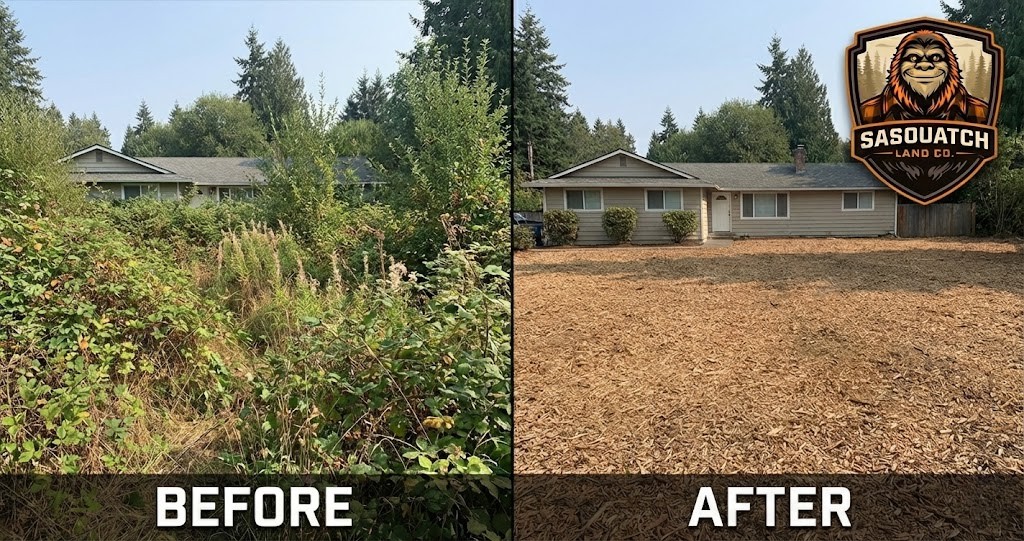
Steep Slope Clearing — Western WA
Overgrown hillside cleared with specialized tracked equipment, preventing erosion.
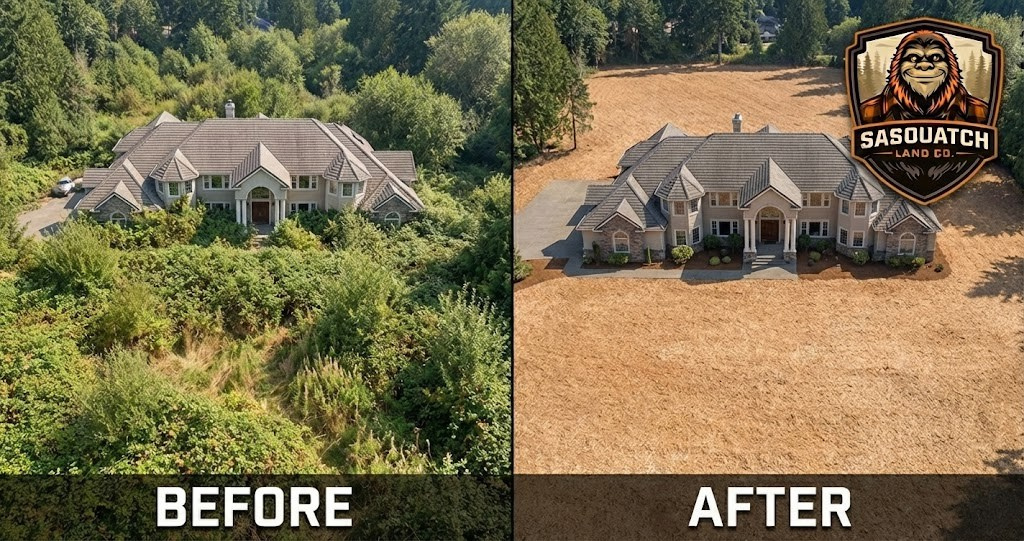
Embankment Clearing — Snohomish County
Dense brush on steep embankment mulched to restore visibility and prevent slope instability.
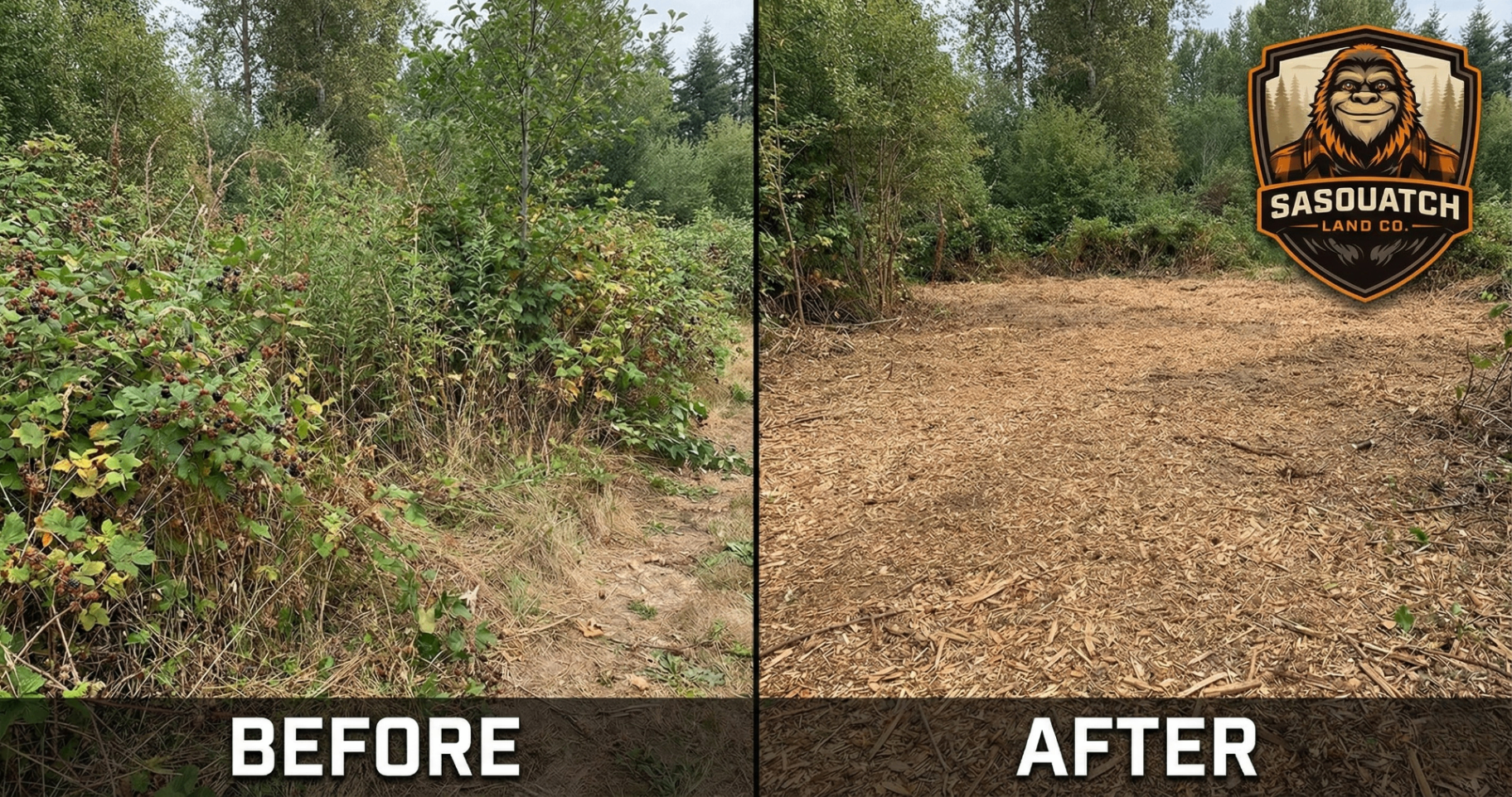
Hillside Blackberry Removal
Invasive blackberry covering steep hillside cleared and mulched for soil stabilization.
Ready to Get Started?
Free estimates within 48 hours. Most jobs completed in a single day. No hidden fees, no surprises.
Request Your Free QuoteFrequently Asked Questions
Hillside Mulching FAQ
Areas We Serve for Hillside Mulching
Looking for professional hillside mulching near you? We work within about 45 miles of Snohomish, including these communities:
Get Your Free Hillside Mulching Estimate
Call now or fill out our form for a free, no-obligation quote. Most estimates scheduled within 48 hours.