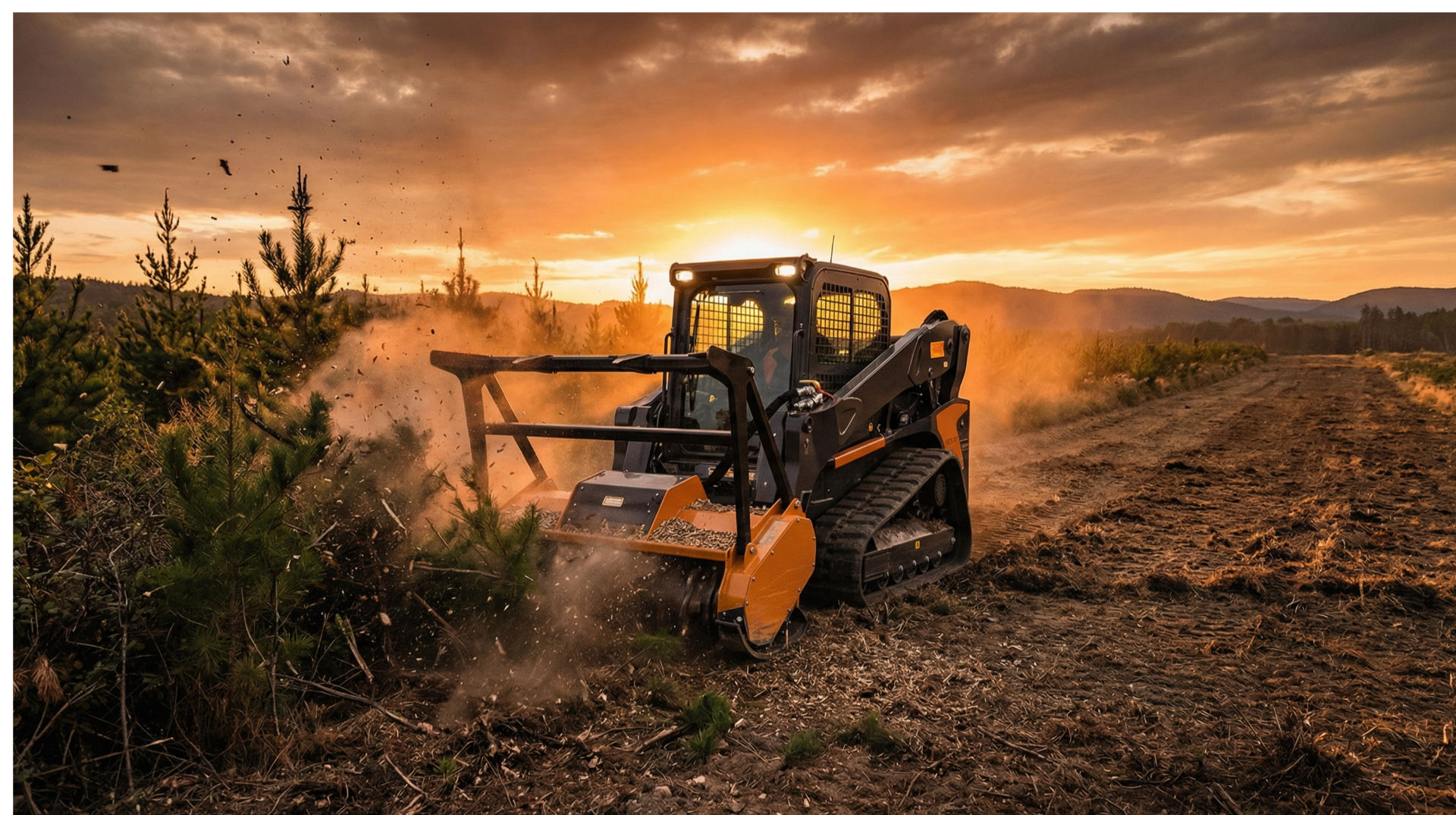
Our #1 Service
Forestry Mulching near Snohomish, WA
Ground you cannot walk through becomes ground you can walk across — in one pass, with nothing burned and nothing hauled off your property.
What You Get When We Leave
Most people do not want a clearing method. They want to walk the back half of their property again, see the fence line, park a trailer, or hand a builder ground that is actually open. That is the deliverable here: brush, canes and small trees gone, stumps taken to or slightly below grade, and the whole area covered in a fine layer of mulched material you can walk on the same afternoon.
There is no burn pile smoldering for a week, no dump trailer cycling in and out, and no disposal line on your invoice — the vegetation stays on site as mulch. That mulch layer also does real work through a Western Washington winter: it holds soil in place on bare ground and shades out a good share of the seed that would otherwise sprout first.
What it does not do is grade or landscape. You are getting cleared, walkable, visible ground — not a compacted pad or a finished lawn. If that is the outcome you are after, the method below is how we get there.
What Is Forestry Mulching?
Forestry mulching is a land clearing method that uses a single machine equipped with a high-powered rotary drum mulcher to grind trees, brush, stumps, and vegetation directly into natural mulch. Unlike traditional clearing methods that require multiple machines, burn permits, and hauling crews, forestry mulching accomplishes everything in one pass. The result is a clean, level surface covered in a layer of organic mulch that enriches the soil, prevents erosion, and suppresses regrowth.
At Sasquatch Land Co., we run a CAT 275XE forestry mulching package with an upgraded CAT HM415 mulching head — a machine-and-attachment combination that represents a six-figure equipment investment, well beyond the light skid steers and entry-level heads most clearing outfits show up with. That difference shows in the finish: more power at the drum, better traction on wet ground, and a cleaner, more consistent result in a single pass. This machine is purpose-built for the dense, wet vegetation found throughout Western Washington — from thick blackberry stands in Snohomish County to second-growth timber in the Cascade foothills. Our equipment handles trees up to 12 inches in diameter and processes brush of any density.
Why Forestry Mulching Is the Best Choice for Western Washington
Western Washington's unique climate creates specific challenges that make forestry mulching the ideal clearing method. With 35–50 inches of annual rainfall across Snohomish, King, Skagit, and Island counties, traditional bulldozing creates massive erosion problems on the region's clay-heavy soils. The mulch layer left by our process acts as a natural erosion barrier, holding soil in place during the heavy fall and winter rains.
The Pacific Northwest's aggressive growing season means cleared land can become overgrown again within a single year if not properly managed. Forestry mulching suppresses regrowth by creating a thick mulch mat that blocks sunlight from reaching seeds and root sprouts. This gives you longer-lasting results compared to simply cutting vegetation at ground level.
Unlike burning — which is increasingly restricted throughout Washington due to air quality regulations — forestry mulching produces zero smoke and requires no burn permits. This makes it the go-to method for clearing in residential areas, near waterways, and on properties where smoke and hauling are not options.
Applications for Forestry Mulching
Forestry mulching is versatile enough to handle virtually any vegetation management project in Western Washington. Residential property owners use our services to reclaim overgrown backyards, clear building sites, and reopen overgrown ground around homes. We regularly clear half-acre lots in Everett and Marysville as well as 20-acre parcels in rural Arlington and Monroe.
Developers and builders rely on forestry mulching for site preparation because it preserves topsoil integrity — critical for passing compaction tests and managing stormwater drainage. Unlike grubbing and grading, mulching keeps the soil structure intact while removing all above-ground vegetation.
Farmers and ranchers throughout Skagit and Island County counties use forestry mulching to reclaim overgrown pastures, clear fence lines, and remove invasive species that reduce grazing capacity. The mulch layer decomposes over 12–18 months, adding organic matter back into agricultural soils.
Our Forestry Mulching Process
Every job starts with a free on-site estimate. We walk your property, assess the vegetation density, identify any obstacles (utilities, wetlands, property lines), and provide a clear, fixed-price quote — no surprise charges.
On job day, we arrive with our CAT 275XE and mulching head ready to work. Most residential lots (under 2 acres) are completed in a single day. Larger properties may take 2–3 days depending on terrain and vegetation density. We work methodically across the property, mulching everything to ground level and leaving a uniform mulch layer 2–4 inches deep.
After clearing, we do a final walk-through with you to ensure everything meets your expectations. We clean up any mulch that's migrated onto driveways or neighboring properties, and we leave your site ready for whatever comes next — whether that's building, planting, or simply enjoying your reclaimed land.
Forestry Mulching vs. Other Clearing Methods
Compared to bulldozing, forestry mulching removes the hauling, disposal and burn-crew line items entirely, which is where a lot of a traditional clearing bill actually sits. A single operator with one machine replaces the bulldozer, excavator, dump trucks, and burn crew required for traditional clearing.
Compared to hand-clearing with chainsaws, forestry mulching covers far more ground per day and produces a more consistent finish. Hand clearing also leaves stumps and root balls that require separate removal — our mulching head processes everything down to ground level in one pass.
Compared to chemical treatment (herbicides), forestry mulching provides immediate results with zero chemical runoff. This is especially important in Western Washington, where properties near salmon-bearing streams and wetlands face strict environmental regulations.
Western Washington Terrain Expertise
We work across the varied terrain inside our roughly 45-mile service radius. From the flat river bottoms of the Skagit Valley to the steep hillsides above Lake Stevens, from the sandy soils near Stanwood to the heavy clay in Monroe — we've seen it all and know how to adapt our approach to each landscape.
Western Washington's mix of Douglas fir, red alder, big-leaf maple, and aggressive understory species like salal, sword fern, and Himalayan blackberry requires specific equipment settings and techniques. Our operators adjust mulching head speed, ground pressure, and approach angle based on the specific vegetation and soil conditions on your property.
Real Projects
Forestry Mulching: the same ground, before and after
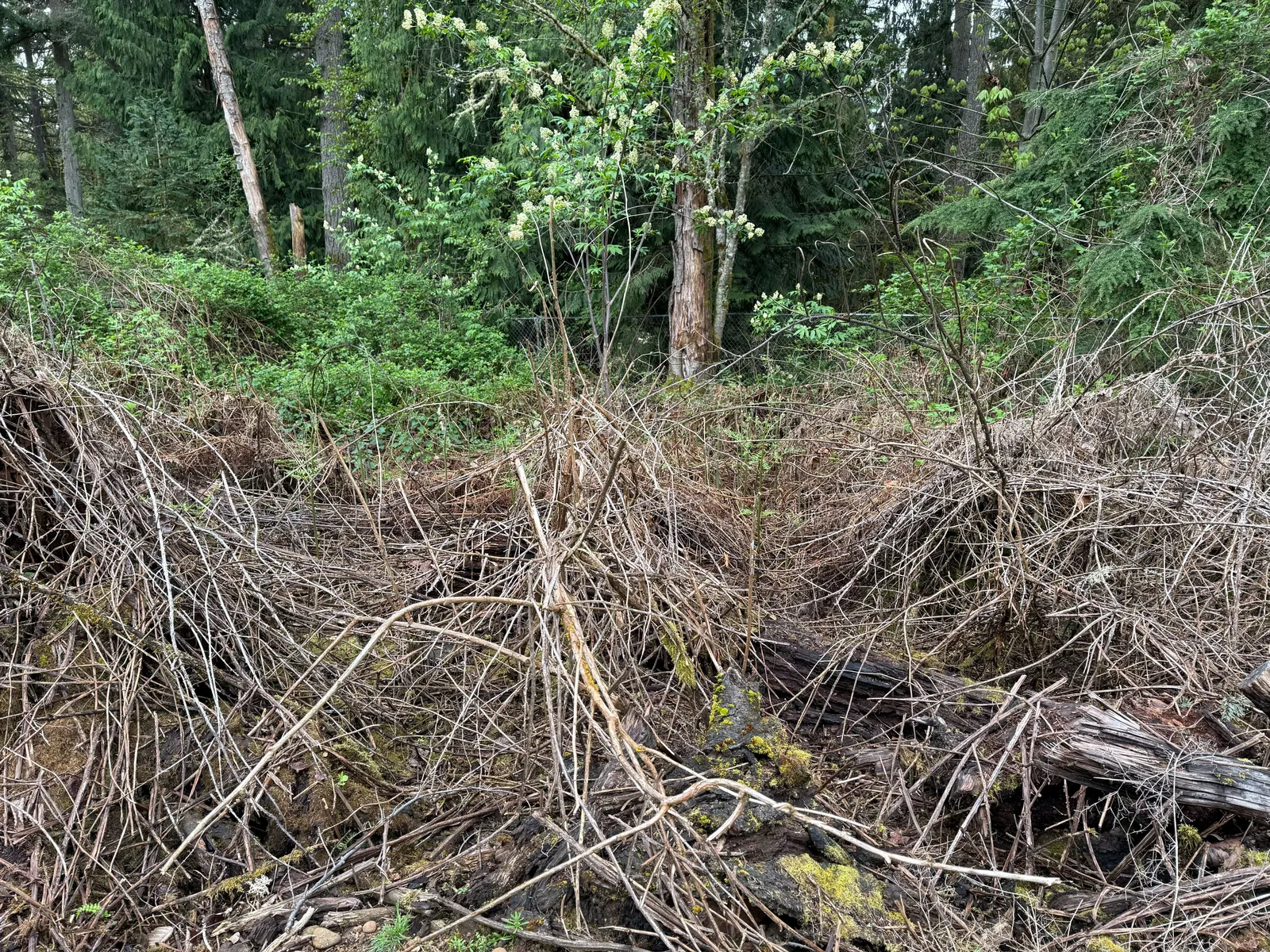
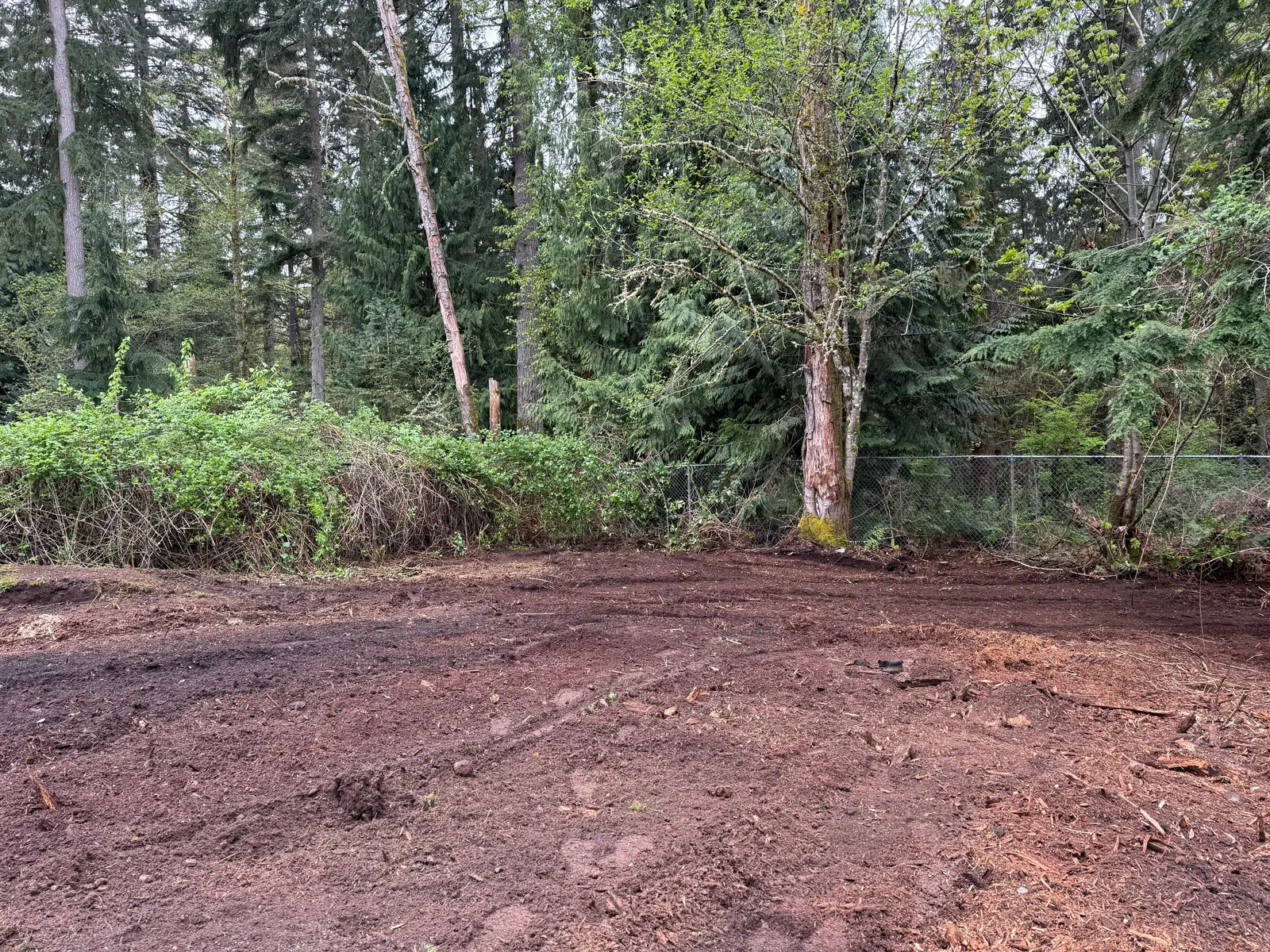
Every photo is a real Sasquatch Land Co. job, shot from the same spot before and after. Drag the handle to see the difference.
Woodland & Brush
Downed brush and cane thicket returned to usable ground
Everything was processed on site — no burn pile, nothing hauled off. The mature trees and the fence stayed exactly where they were.
Read the project notesBefore & After
Forestry Mulching Results
Real before-and-after results from Sasquatch Land Co. projects across Snohomish County and the surrounding region.
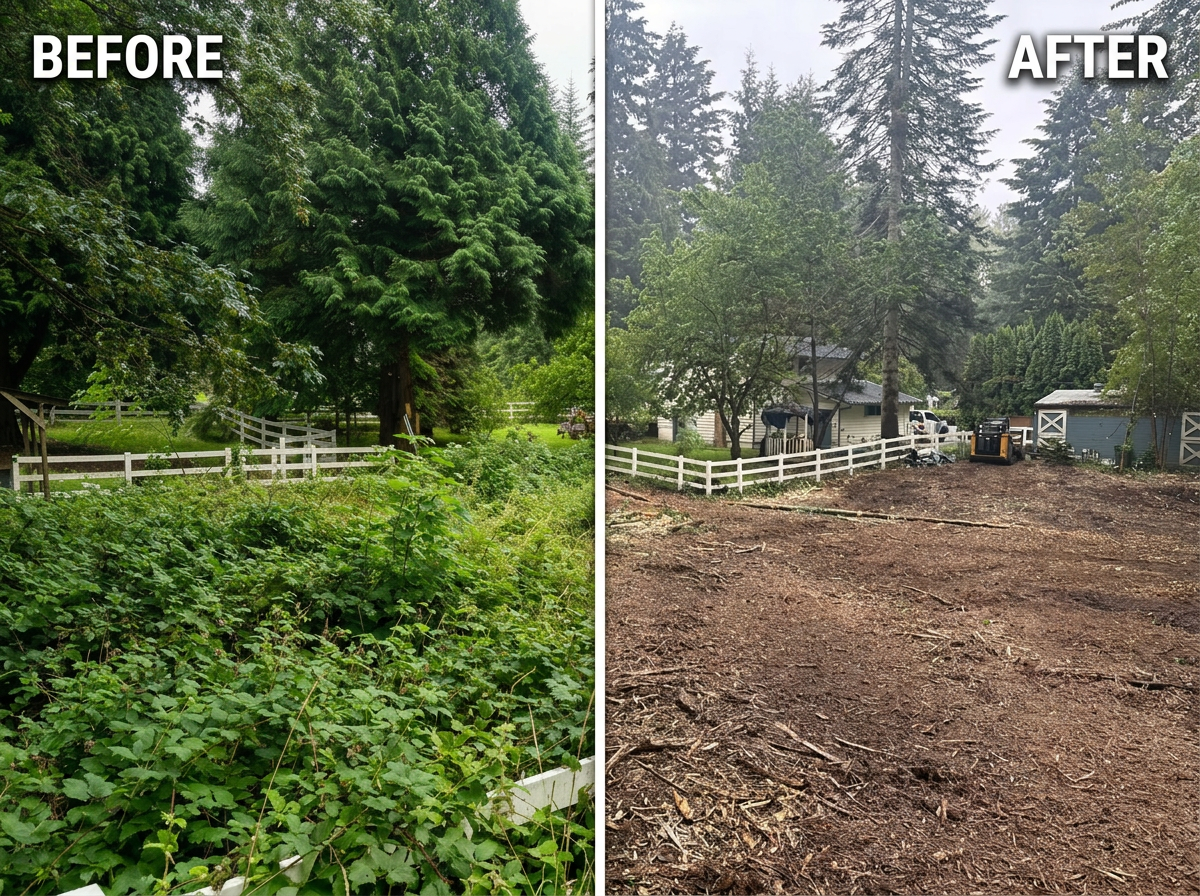
Overgrown Property Reclaimed — Snohomish County
Choked fence line and dense brush ground into clean mulch in a single day with a tracked forestry mulcher.
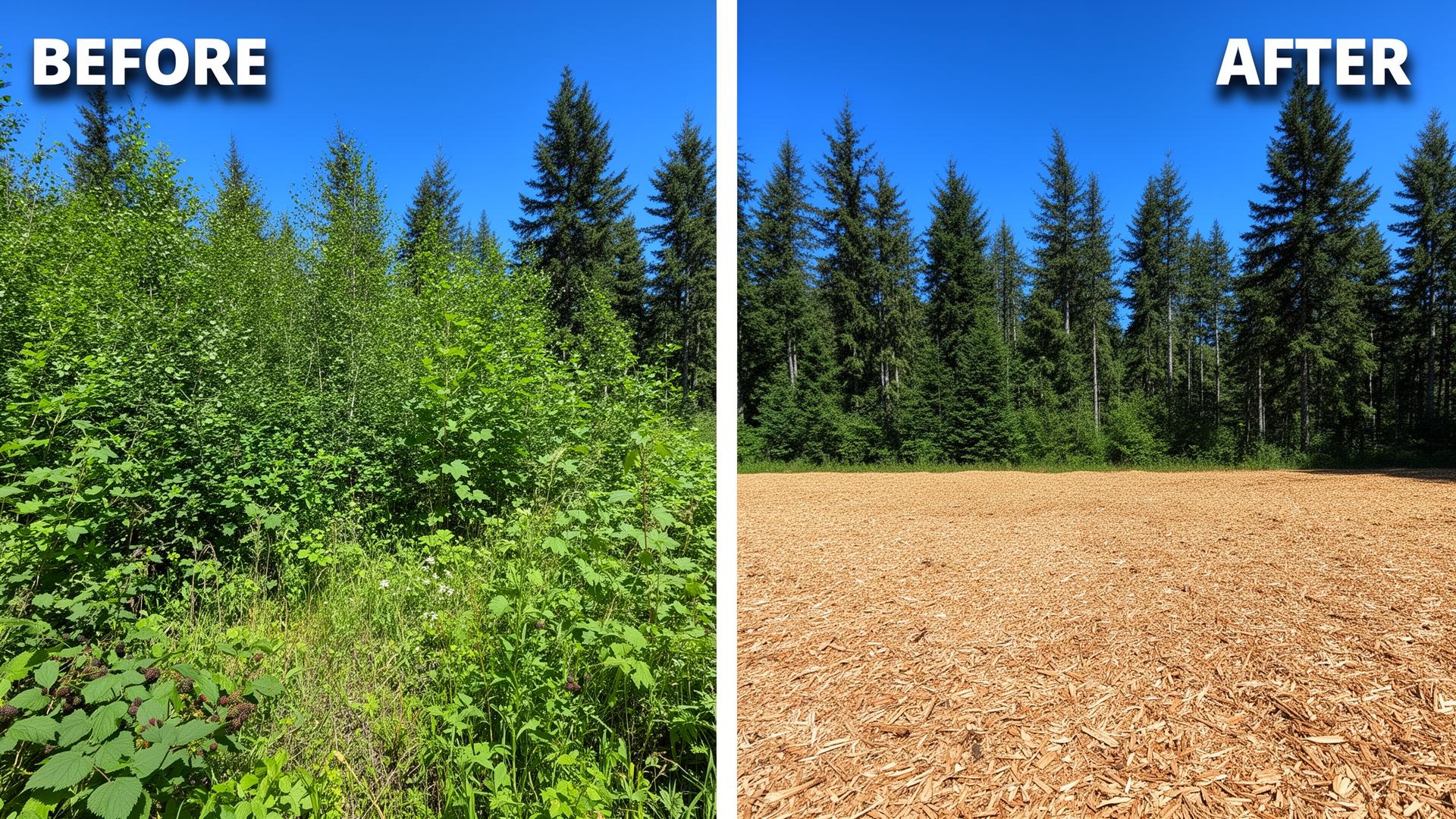
Forest Edge Mulching — Western WA
Wall of saplings and Himalayan blackberry along a Douglas fir tree line mulched to bare ground.
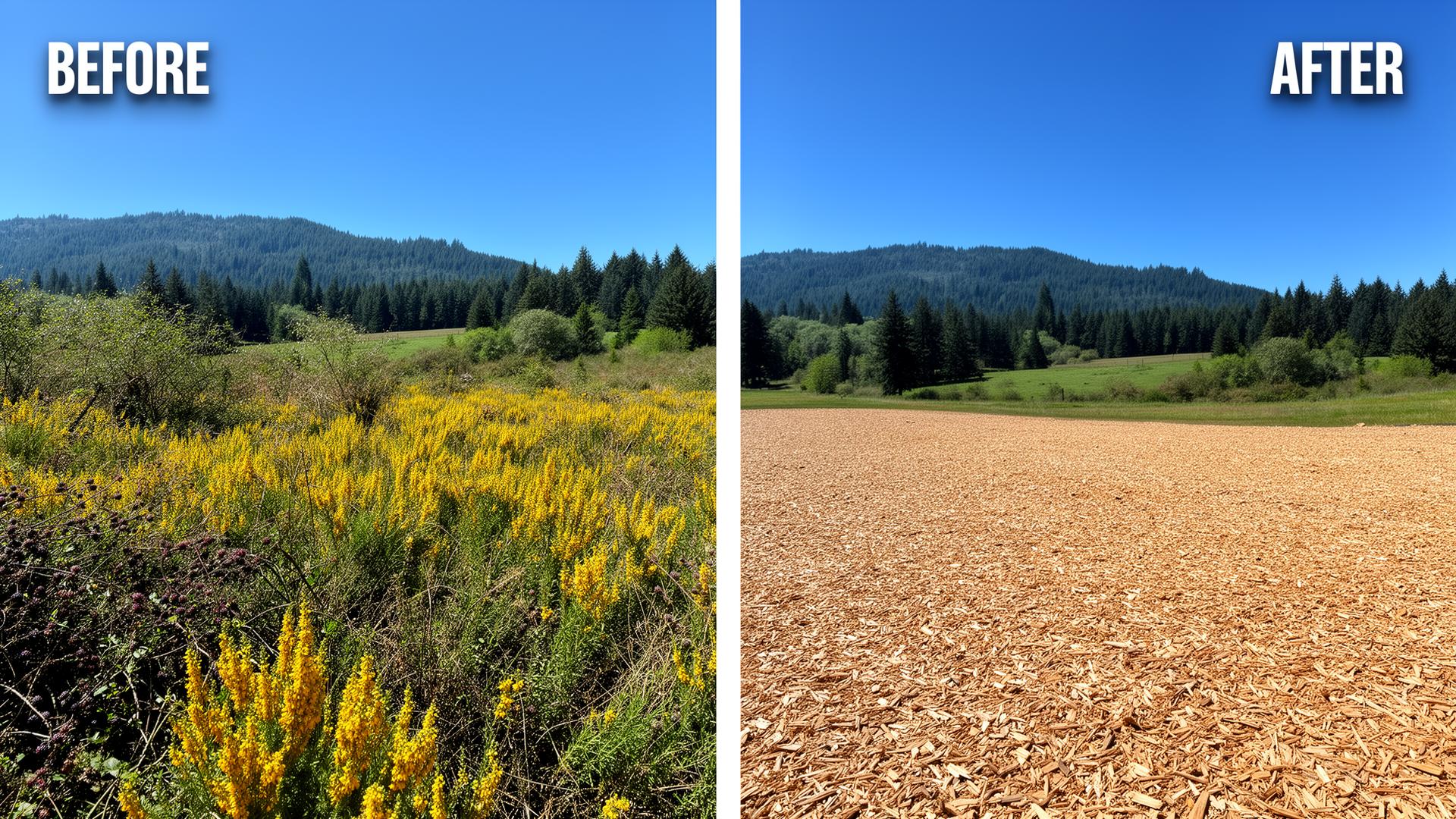
Pasture Edge Reclamation — Cascade Foothills
Sunny acreage overrun with scotch broom and brush restored to clean, usable pasture-edge land.
Who You'll Meet
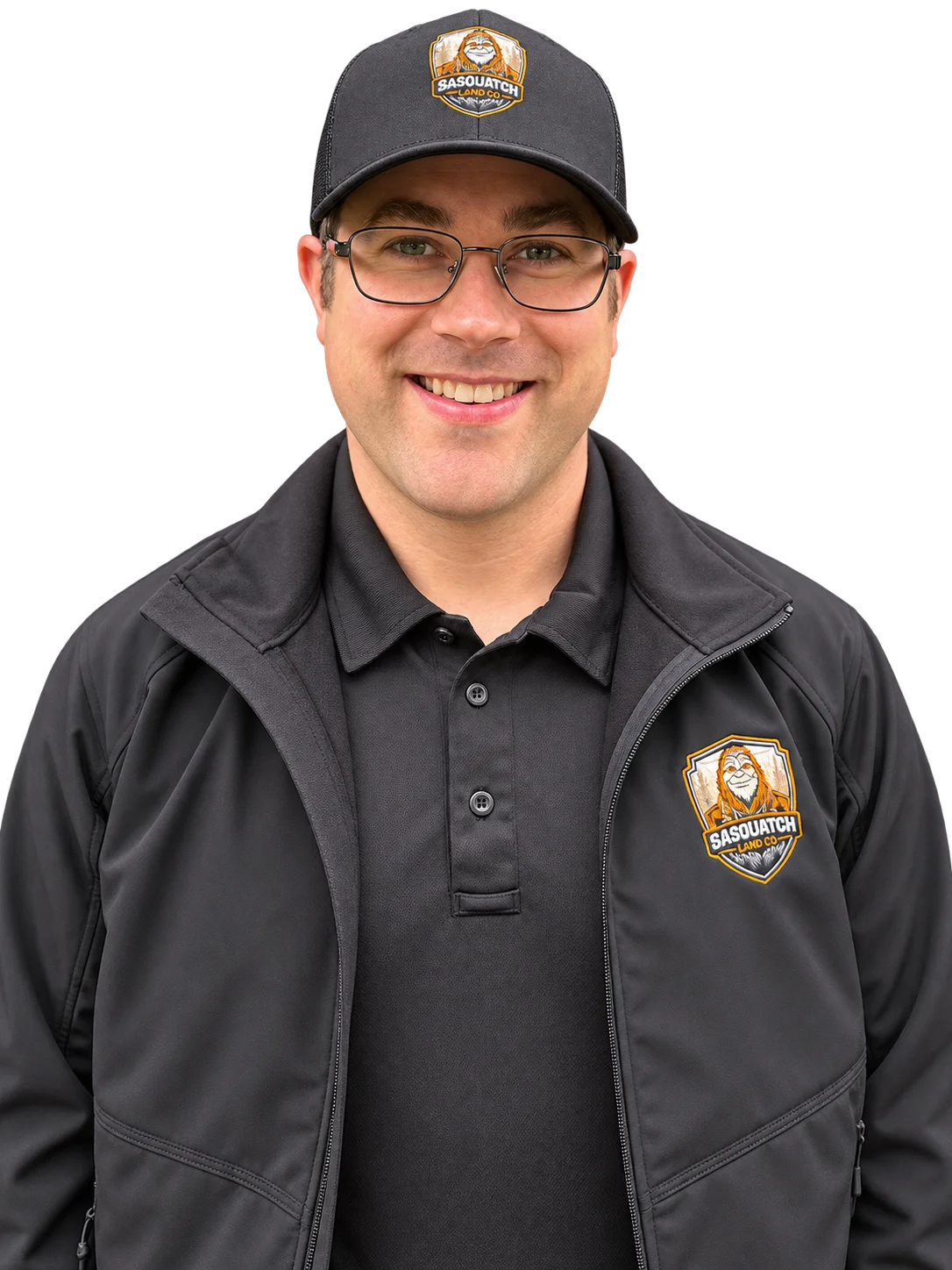
Meet Eric — Your Sasquatch Operator
Eric is the experienced operator you can expect to see running the machine on your property. He walks the scope with you first, protects the trees, fences, and features that should stay, and works toward one thing: clean, usable ground you can actually walk.
- Local Operator
- Licensed & Insured Team
- Real Project Photos
Ready to Get Started?
Free estimates within 48 hours. Most jobs completed in a single day. No hidden fees, no surprises.
Request Your Free QuoteFrequently Asked Questions
Forestry Mulching FAQ
Areas We Serve for Forestry Mulching
Looking for professional forestry mulching near you? We work within about 45 miles of Snohomish, including these communities:
Get Your Free Forestry Mulching Estimate
Call now or fill out our form for a free, no-obligation quote. Most estimates scheduled within 48 hours.