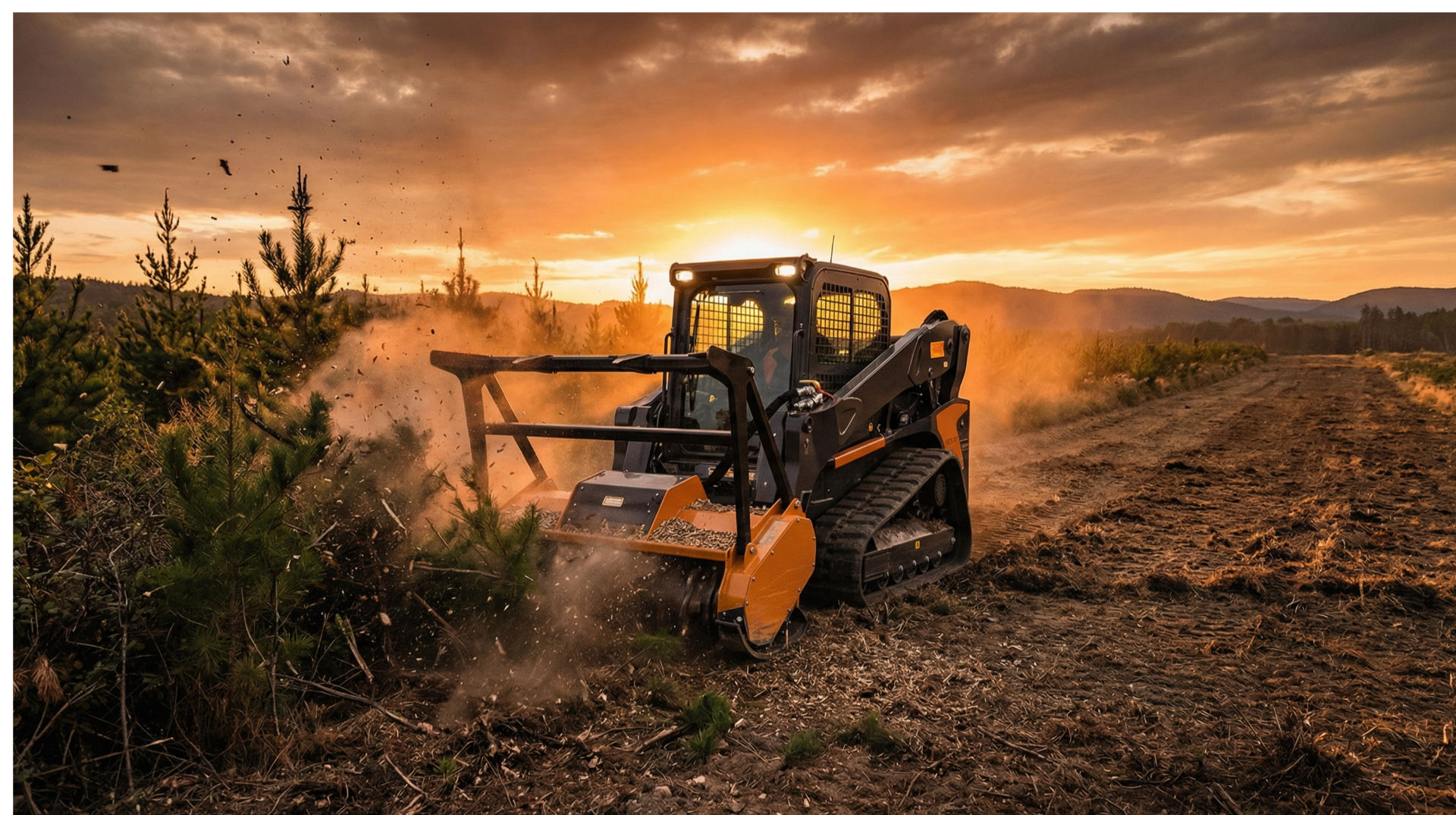
Side by side
| Brush hogging | Forestry mulching | Dozer clearing | |
|---|---|---|---|
| What it cuts | Grass, light brush at surface height | Brush, canes and small trees, processed in place | Everything, including stumps and topsoil |
| Depth of work | Surface only | Several inches into the surface layer | Below grade — soil is moved |
| What is left | Cut material lying on the ground | Mulch layer left as ground cover | Bare, reshaped dirt plus debris piles |
| Debris handling | Left in place | Processed on site — no burning or hauling | Piles to burn, bury or truck away |
| Soil disturbance | Minimal | Low | High |
| Best for | Maintaining already-open ground | Reclaiming overgrown property, blackberry, wooded edges | Building pads, roads and finished grade |
Why wet ground changes the answer
Western Washington soil holds water most of the year. Tracked mulching equipment spreads load and leaves a mulch mat that helps carry weight, so the ground recovers faster. Dozer work on the same site in the same month moves wet soil, compacts it and leaves piles that are heavy, muddy and expensive to deal with.
This is not an argument that dozers are bad. If your project ends in a building pad or a driveway, soil has to move. The mistake is using a grading machine to solve a vegetation problem.
Where brush hogging still makes sense
- Fields and pasture that are already open and just need to be knocked down.
- Annual maintenance passes after a property has been reclaimed.
- Ground with no woody stems large enough to stop a rotary cutter.
The honest limitation of mulching
Mulching leaves a mulch layer, not bare dirt. It does not remove stumps below grade and it is not a chemical kill on invasive species. If the next step is a slab, expect a separate grading phase.