Why per-acre pricing is misleading
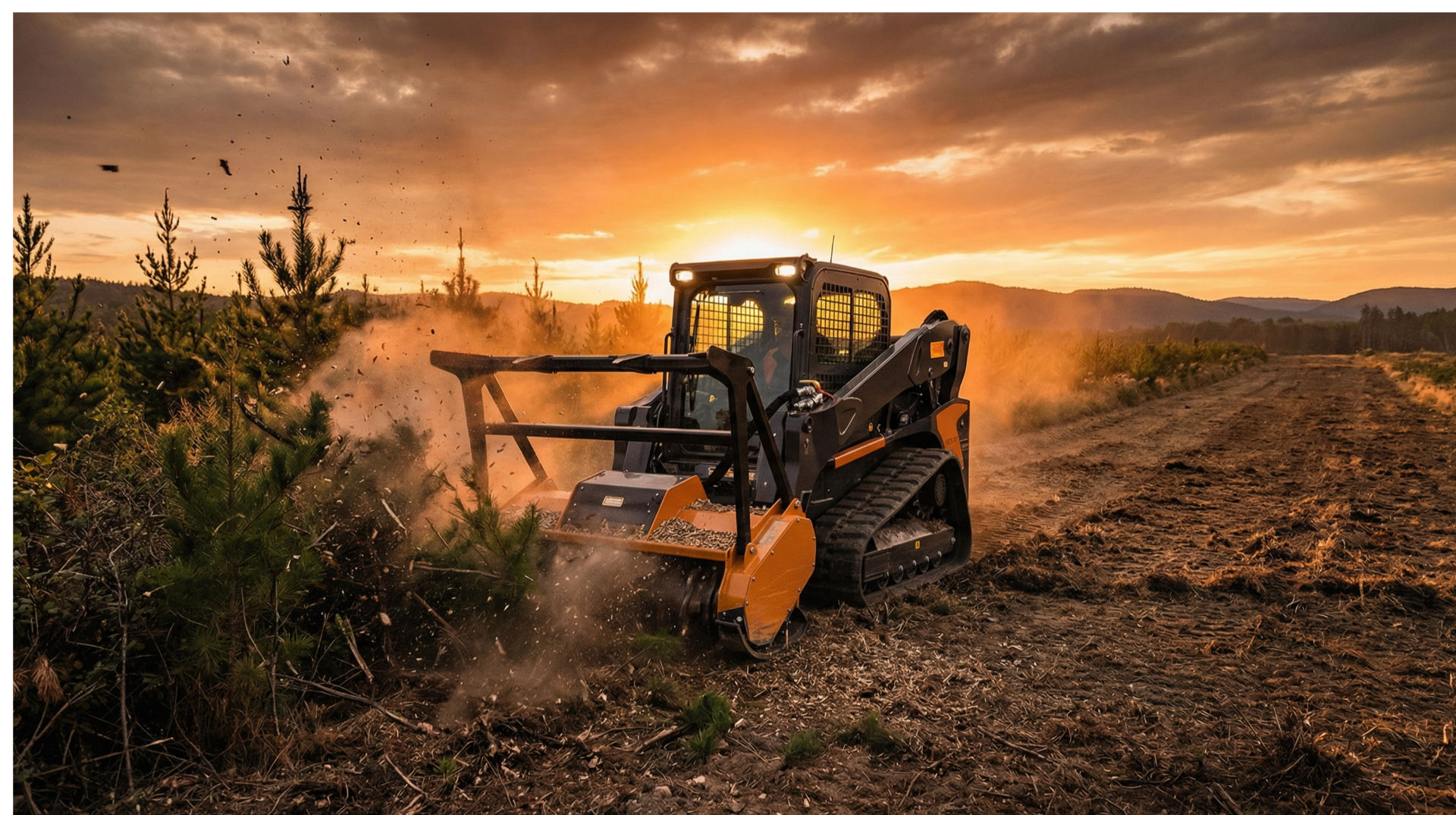
A mulcher bills time. An acre of light grass and scattered saplings and an acre of layered blackberry over downed wood are not the same job, and no honest per-acre number covers both. That is why we quote from machine time and then commit to a fixed price after seeing the ground.
Mobilization — loading, trailering, unloading and staging equipment — costs the same whether you have a quarter acre or five. On small jobs that fixed cost dominates, which is why a tenth of an acre never prices like a tenth of five acres.
The five variables
| Variable | Effect on price | Why |
|---|---|---|
| Area actually cleared | Largest single driver | More ground means more machine hours. |
| Vegetation density | Can multiply hours on the same acre | Layered blackberry, cane mats and small trees take repeated passes. |
| Slope | Increases hours | Sidehill work is slower and requires more care with the head. |
| Access and staging | Can add a fixed cost | Narrow gates, soft ground and long walks slow everything down. |
| Mobilization | Fixed per trip | Same cost for a small job as a large one. |
What does not change the price
- Burning or hauling fees — we process material on site, so there are no dump or burn-permit costs in the quote.
- Change orders after the walk-through. The number agreed on after the on-site assessment is the number.
- Whether you happen to be home during the work.
Wet Western Washington ground
Local soil matters more than most cost articles admit. Saturated ground in the wet season slows tracked equipment and can push work to a drier window. It rarely changes what a job is worth — it changes when it can be done well.
How to get a real number
Trace the exact area you want cleared on satellite imagery in our estimator. That produces a preliminary figure from real acreage instead of a guess over the phone. Every project is then confirmed with a free on-site assessment before any price is committed.