Why blackberry keeps coming back
- It regenerates from root crowns left in the ground, not just from the canes you can see.
- Canes tip-root where they touch soil, so a single plant spreads outward on its own.
- Seed persists in soil and arrives again from birds, so a cleared area is never sterile.
What 'several inches into the surface layer' means
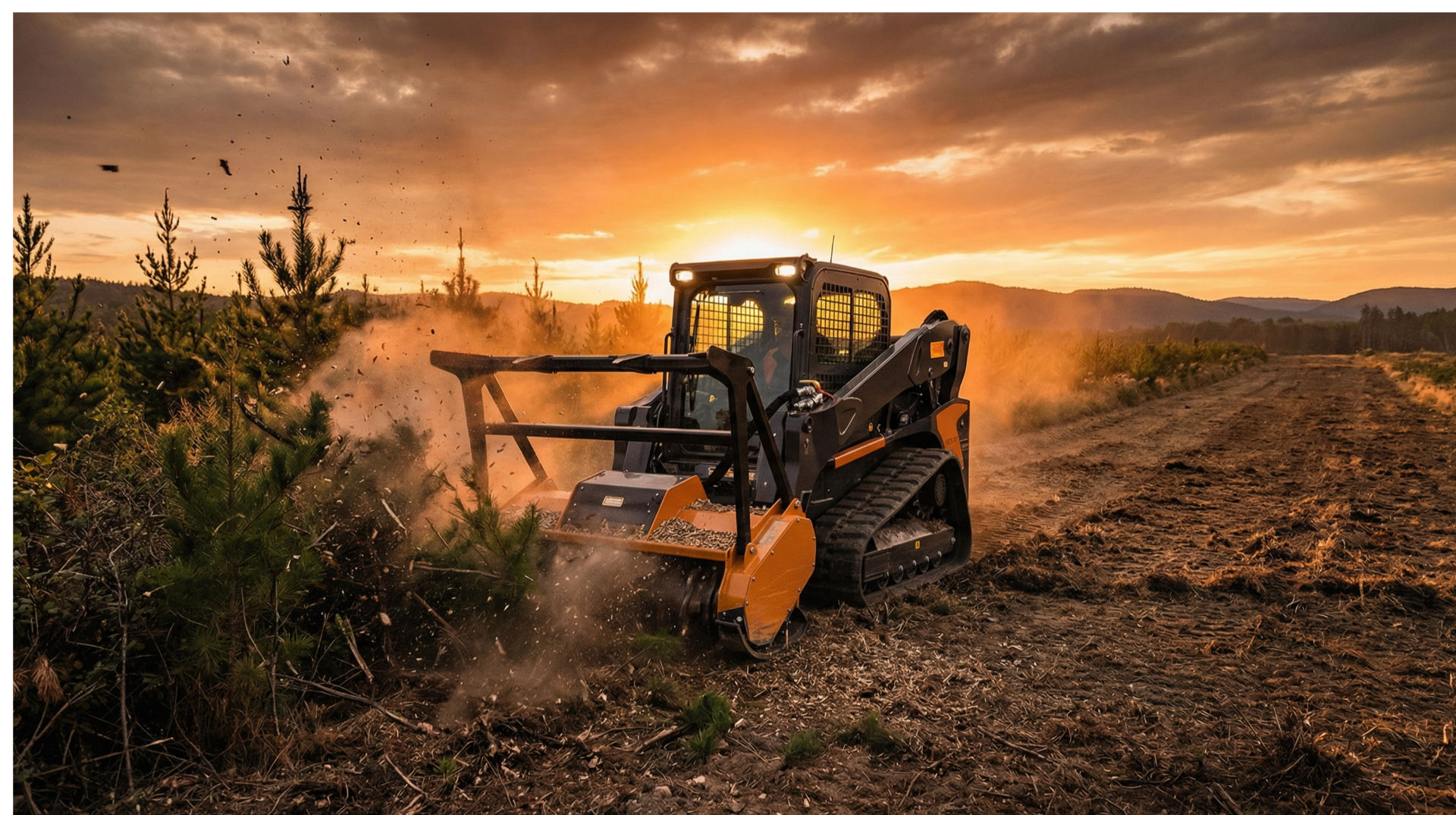
A mulching head can be set to work below the top of the soil surface rather than skimming across it. Instead of shearing canes at ankle height, it processes the cane bases and much of the crown mass where they sit. That is the practical difference between a fence line that looks clear for a season and one that stays manageable.
It is a mechanical process, not a herbicide. We describe it that way deliberately — anyone promising permanent eradication in one pass is overselling it.
A realistic control plan
- Pass one: mulch the mass down and open the ground so you can see what is actually there.
- First season: keep regrowth short. Small green canes are easy; a two-year cane mat is not.
- Follow-up pass: schedule one if the crowns push back hard, usually most valuable in the first or second season.
- Long term: whatever you plan to use the ground for — pasture, lawn, gravel — occupying the space is what keeps blackberry out.
Proof from our own jobs
The fence-line field note shows the same cedar and the same chain-link fence before and after a single mulching pass, with the honest caveat about regrowth attached to it.